Atlas of Childhood and StoryMap: the 2021 edition, “The Future is Already Here,” provides an overview of the impact of COVID-19 on children and adolescents.
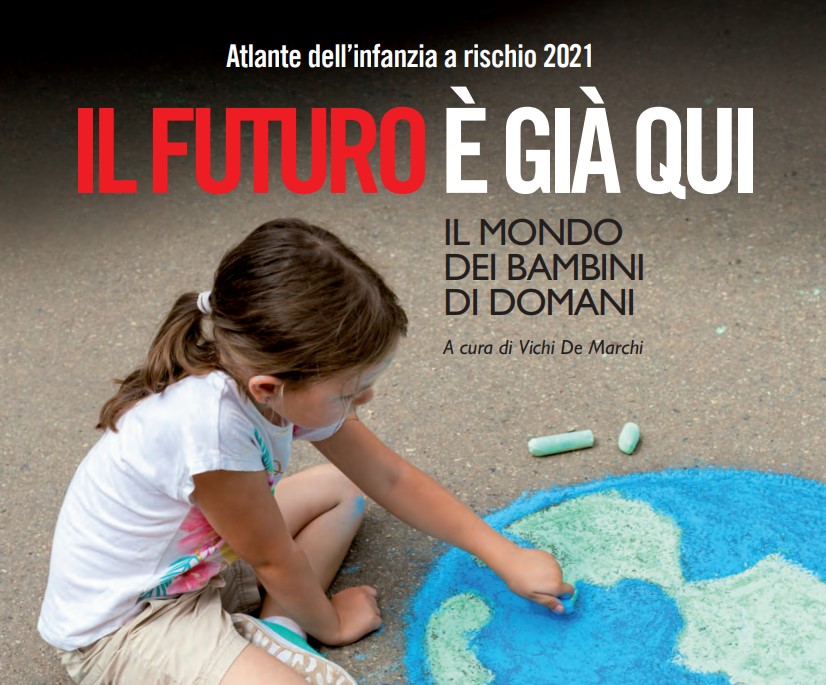
The 2021 edition of the Atlas of Childhood could not fail to take into account the nearly two years of pandemic that have weighed heavily on our lives and had particularly negative effects on young children, adolescents, and all students who have experienced, among other things, long periods of distance learning following the closure of schools. The Atlas will provide an overview of the impact of COVID-19 on the lives of children and adolescents, but above all, it will highlight the most urgent challenges we must address in order to prepare for a future that leaves no room for inequality.
The Atlas 2021: the pandemic and its impact on children
Through its maps, the Atlas aims to describe the diverse world in which children live in our country: it applies to them what is generally used to represent and analyze physical, geological, and environmental data; it uncovers the meaning hidden behind the numbers; it allows the data to dialogue with the daily reality of minors and those who live and work alongside them in the most deprived areas of the country.
An uncertain tomorrow, full of risks rather than opportunities, is what our children unfortunately see and what Atlante seeks to explore. A future compromised on the one hand by crises—economic, educational, climatic—interconnected with the outbreak of the global pandemic, and on the other by the short-sightedness of politicians who have not invested enough in our country’s most precious asset: children.
The COVID-19 emergency has exacerbated an already fragile situation, characterized by a significant demographic decline (we have lost almost one million children in ten years) and a lack of structural investment, especially in education. It has acted as a huge accelerator of inequality. It has amplified existing economic and social divisions, hitting the younger generations particularly hard. The closure of schools, youth centers, and sports facilities has affected and limited opportunities for young people, with greater impact in deprived areas, where the social fabric has quickly broken down. We have taken a dramatic step backward in the fight against poverty.
We are faced with a country characterized by regional disparities, a lack of opportunities, and a social ladder that seems to be moving backwards. We must now face up to our responsibility to make the best use of the resources and tools we need to build a more sustainable society, taking care to bridge the gaps and invest above all in human capital.
(from the Preface to Atlante 2021)
Inside the Atlas
gisAction has processed data and indicators in a GIS environment to create maps and graphs that clearly illustrate the issues addressed. Using specific GIS tools, various types of comparative analyses have been carried out on the data, providing a new and comprehensive view of the phenomena under investigation.
Here are some examples of our contribution:
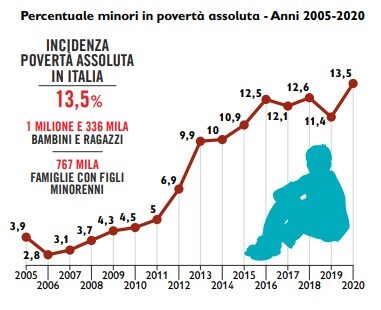
Infographic showing the percentage of children living in absolute poverty
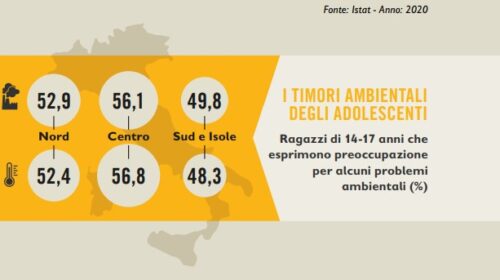
Teenagers’ concerns about the future of the environment
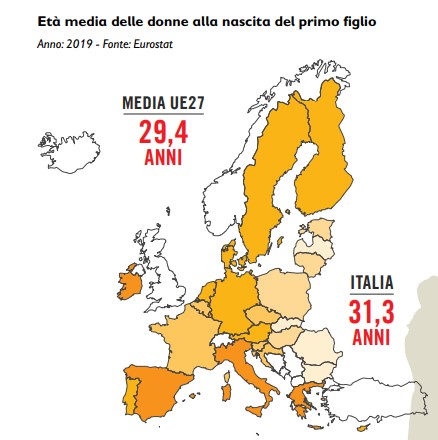
Map of the average age of women at the birth of their first child
Save the Children at GISday
Who we worked with
Save the Children Italia is a non-profit organization established in 1998. It is part of the Save the Children International network, one of the largest independent international organizations.