
Umbria’s agricultural biodiversity, ranging from centuries-old chestnut groves in the Norcia area to ancient indigenous crop varieties, is now accessible through a public, georeferenced digital platform. The project highlights the work of approximately 230 officially registered “custodians” across the region, who are responsible for preserving the local genetic heritage. This approach helps strengthen the protection of agricultural biodiversity as a strategic asset for the regional territory.
The project is coordinated by 3A Parco Tecnologico Agroalimentare dell’Umbria, with technological support from TeamDev Ecosystem, in collaboration with gisAction, organizations specialized in Geographic Information Systems (GIS). The resulting infrastructure transforms years of technical monitoring activities into a publicly accessible georeferenced database, enabling the visualization and mapping of genetic resources across the entire region.
Technology Supporting Monitoring and Access
Data are collected directly in the field through a dedicated application used by Parco 3A technicians and uploaded in real time, ensuring continuous monitoring. To date, approximately 70% of the subjects registered in the Network have been surveyed, representing around 230 farmers, organizations, and citizens. The system records animal breeds, arboreal and herbaceous plant resources, the Italian honey bee (Apis mellifera ligustica), and microbial genetic resources.
The platform allows data to be consulted by municipality or by resource type, promoting transparency and simplifying information exchange among stakeholders, while strengthening regional agricultural biodiversity conservation activities.
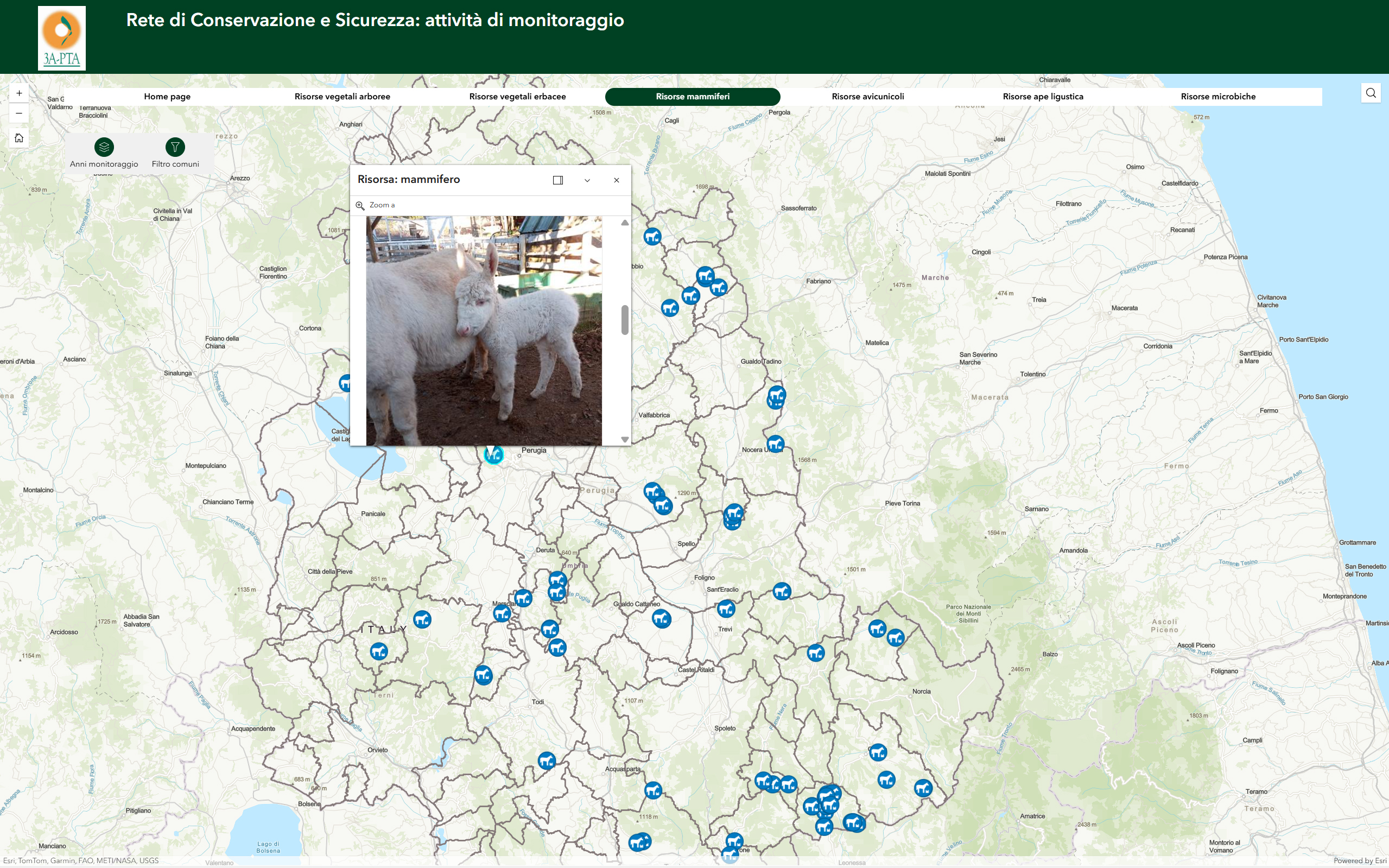
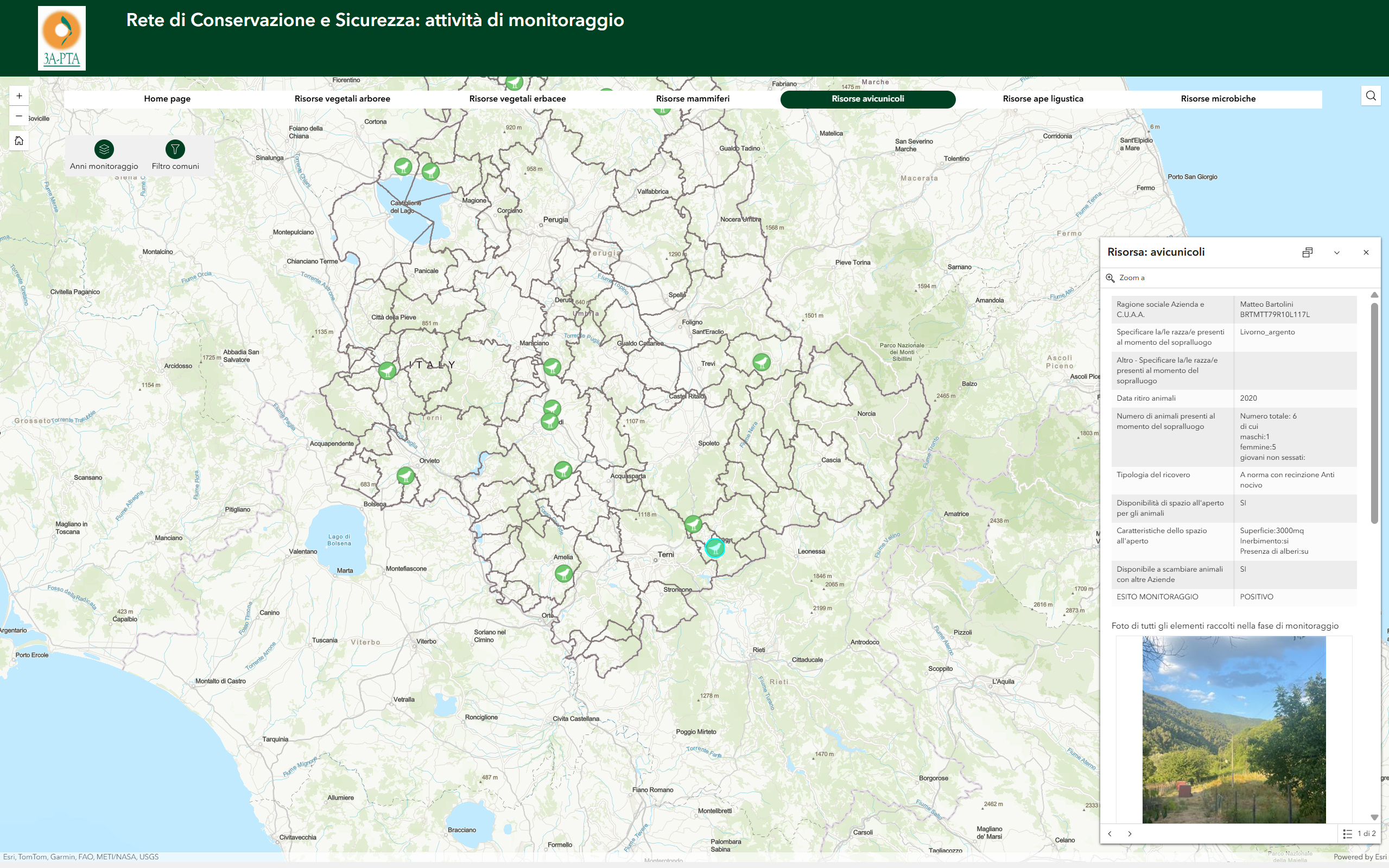
Mapping and Operational Planning
The use of interactive mapping tools has made it possible to identify sites of significant historical and agronomic value, such as the centuries-old chestnut groves in the Norcia area, as well as to support the recovery of rare native tree varieties.
The platform supports both “in situ“ conservation activities and the planning of operational interventions, such as the annual free distribution of plant and animal propagation material, including the Italian honey bee. These activities take place at the Pantalla di Todi headquarters between February and May.
The activities associated with the platform fall within the Regional Agricultural Biodiversity Safeguard Service and are funded through PSR/CSR resources (Measure SRA16). The initiative provides public administrations and citizens with a structured digital tool for accessing and understanding Umbria’s agricultural genetic resources.
Related Journalistic Article
For further insight, a journalistic article published by ANSA is available, describing the transformation of the Umbrian conservation network into a digital ecosystem.