GIS for Urban Regeneration supports the process of revitalizing degraded urban areas. In addition, it promotes the recovery of abandoned spaces and underused infrastructure. The objective is to improve the physical, economic, and social conditions of local communities. In this way, regeneration becomes an operational and measurable tool.
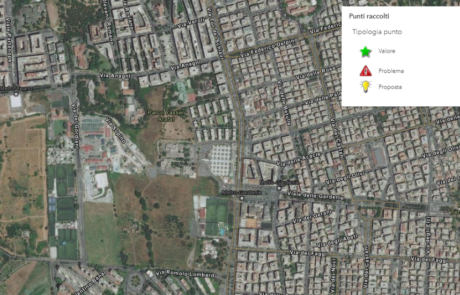
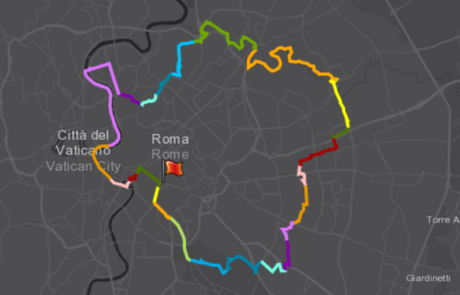
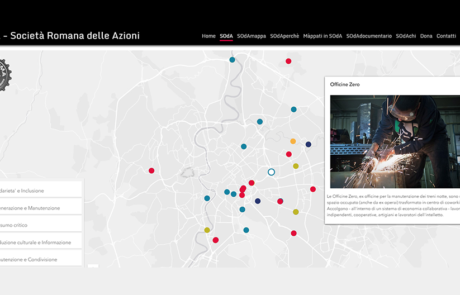
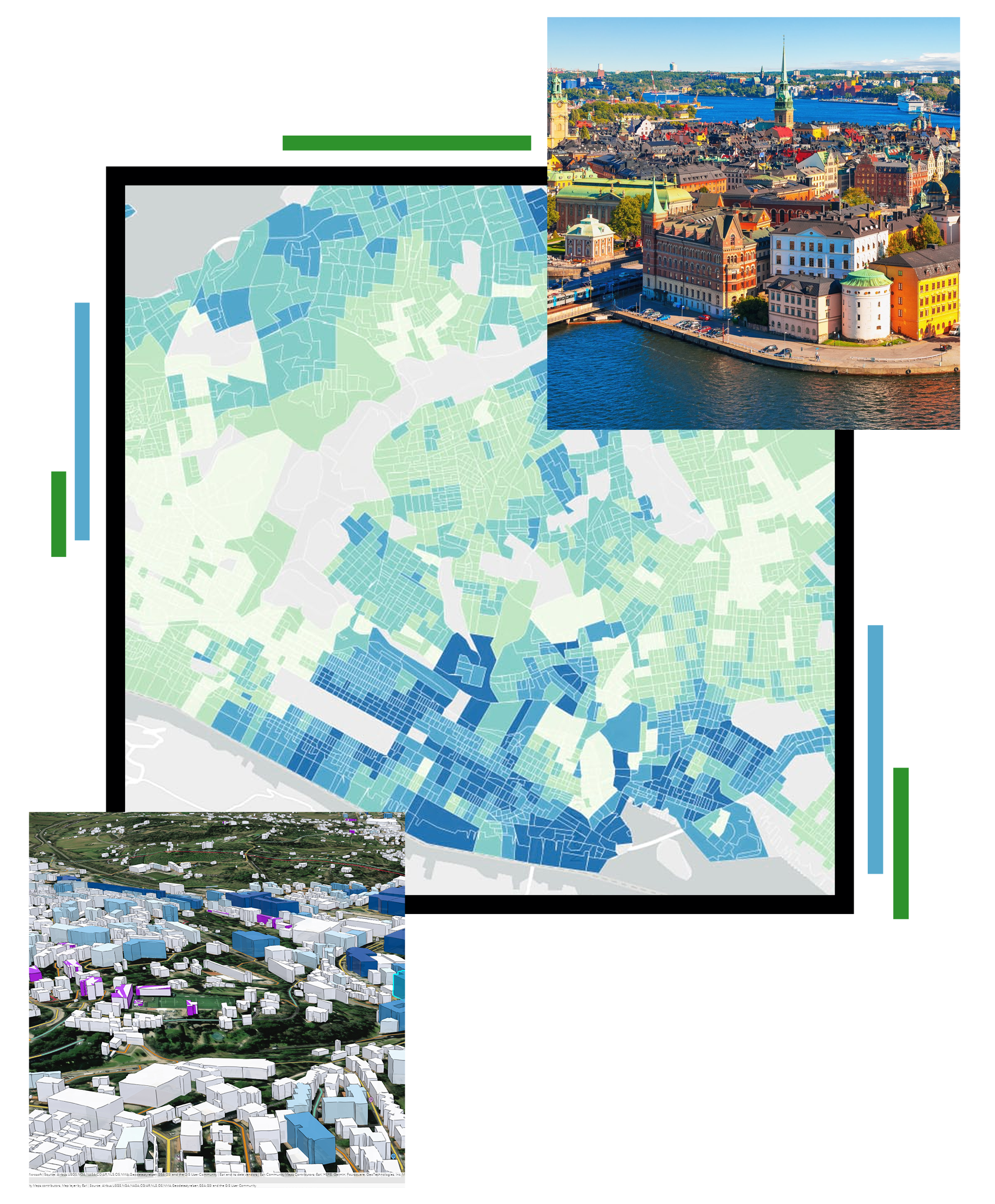
First, GIS makes it possible to analyze the condition of the territory. Consequently, disused buildings, degraded areas, and infrastructural criticalities can be identified. Moreover, spatial data allow the assessment of accessibility, services, and urban connections. As a result, intervention planning becomes more targeted and consistent.
Subsequently, urban regeneration involves the redevelopment of existing infrastructure. At the same time, it предусматри the creation of new housing and spaces for economic activities. In addition, it includes the improvement of public spaces, services, and urban facilities. Within this framework, GIS facilitates coordination between design, implementation, and monitoring.
In parallel, attention to sustainability guides design choices. Consequently, efficient use of resources, reduction of land consumption, and improvement of environmental quality are promoted. Furthermore, inclusiveness becomes a central criterion. For this reason, projects aim to increase accessibility and equity among different neighborhoods.
Finally, continuous monitoring makes it possible to assess the effects of interventions over time. At the same time, it enables the measurement of social, economic, and environmental impacts. In summary, GIS for Urban Regeneration transforms strategic vision into concrete actions. Therefore, it fosters more vibrant, resilient, and attractive communities. It improves local opportunities. It strengthens quality of life. It supports data-driven decisions. It creates lasting value for citizens, administrations, and territories in the long term. Moreover, these interventions promote responsible investment, social cohesion, and widespread urban innovation. At the same time, they encourage balanced, measurable, and replicable development models at both local and metropolitan scales for shared and sustainable urban growth.